
Contents
A Blueprint For Explainer Video Scripts That Hit The Right Spots
Step 1: Know Your Target Audience Before Writing
Step 2: Define Your Core Message
Step 3: Create a Simple Video Script Outline
Step 4: Write a Relatable Hook
Step 5: Focus on Storytelling Techniques
Step 6: Keep Script Length Short & Crisp
Step 7: Add a Strong Call-to-Action (CTA)
Step 8: Refine With Voice-Over & Testing
Explainer Video Script Examples (Mini Templates)
The digital world runs on non-static movements today. From the flicker of an animated logo to the immersive, groundbreaking realism of a 3D film, animation has mutated into one of the most powerful storytelling tools in modern media. But it didn’t start in a render farm or a design studio filled with high-spec machines or AI prompts. It began with hand-drawn sketches, mechanical toys, and a deep human desire to bring still images to life.
Understanding animation’s journey is not just a nostalgic experience. It’s about seeing how imagination, art, and technology have always worked together to shape how people experience stories, brands, and ideas. These animation facts reveal not only where the craft came from but also where it’s headed.
History & Overview of Video Animation
Long before computers and software, humans were experimenting with visual motion. Early cave and Stone Age paintings often depicted animals with multiple legs, an attempt to show movement even in still form. Centuries later, this curiosity gave birth to optical illusion devices such as the thaumatrope (a disk that created motion when spun) and the zoetrope, which displayed sequential drawings in motion through spinning slits. These inventions were the earliest steps toward animation as we know it.
By the late 19th century, artists began experimenting with film reels and photography to capture moving images. The first recognized animated short, Émile Cohl’s “Fantasmagorie” (1908), was composed of 700 hand-drawn frames photographed individually. It marked the official beginning of animation as a cinematic art form.
The 1920s to 1940s became known as the Golden Age of Animation. Walt Disney Studios introduced synchronized sound in Steamboat Willie (1928), while Warner Bros. and MGM created iconic characters like Bugs Bunny and Tom & Jerry. The industry was booming, but every frame still required thousands of hand-drawn illustrations and lots of hands, literally.
The 1990s ushered in a digital revolution. Pixar’s Toy Story (1995) became the world’s first fully computer-animated feature film, signaling a shift toward CGI-driven storytelling. The film’s success redefined what was possible in animation and started a boom in animation films. Today, from virtual production to real-time rendering, animation is changing faster than ever before.
| Era | Innovation | Key Figure | Impact |
| 1800s | Zoetrope | William George Horner | Introduced a visual motion illusion |
| 1908 | Fantasmagorie | Émile Cohl | First fully hand-drawn animated film |
| 1928 | Steamboat Willie | Walt Disney | Integrated sound with animation |
| 1995 | Toy Story | John Lasseter | Pioneered computer-generated imagery |
| 2020s | Render & CGI-Driven Animation | Plethora of Animation Studios | Enabled real-time, scalable production |
| 2022- | AI & Prompt Animation | Sora, Nano Banana, Runway, Claude, Veo, Midjourney | Prompt generation, AI-based videos, & ideation |
Animation has always mirrored the evolution of technology, and in 2026, our video animation studio continues to push the medium into new territory. With advancements in real-time rendering, AI-assisted motion, and cloud infrastructure, the gap between art and technology has never been smaller.
Fun Facts About Animation You Probably Didn’t Know

Behind every animated masterpiece are thousands of fascinating details that most viewers never notice. Here are ten animation facts that capture the magic, innovation, and occasional chaos of this industry:
- The first animated film predates sound cinema. Émile Cohl’s Fantasmagorie was created in 1908, nearly two decades before Steamboat Willie introduced sound to animation.
- Pixar once lost almost the entire Toy Story 2 movie. During production, a staff member accidentally deleted the film’s files. It was later recovered from a director’s home backup drive.
- Japan produces over 60% of the world’s animated content. The global anime industry now exceeds $30 billion annually, proving animation’s cultural and economic power.
- Mickey Mouse wasn’t Disney’s first creation. Oswald the Lucky Rabbit came before him but was lost in a legal dispute, inspiring Disney to design Mickey in 1928.
- Stop-motion animation has been around since 1898. The Humpty Dumpty Circus was the first to use clay models to simulate motion frame by frame.
- The longest-running animated series in history is The Simpsons. It has aired more than 750 episodes since 1989 and shows no sign of slowing down.
- 3D animation started earlier than most think. Vertigo (1958) used early CGI sequences created with mechanical plotters decades before Pixar’s first release.
- Every frame matters. Traditional animation requires 24 frames per second, meaning a 90-minute film can contain more than 129,000 frames.
- AI is now reshaping animation pipelines. Machine learning helps automate lip-syncing, motion capture cleanup, and scene composition, saving thousands of production hours.
- Cloud rendering has changed everything. Modern studios like Cloud Animations use cloud render farms to deliver high-quality visuals faster and at lower costs.
Animation is a fascinating mix of creativity, passion, and innovation. It’s a world where technology supports art, not the other way around. For studios that want to stay competitive, understanding these fun facts about animation is no mere trivia. It’s an insight into how the industry constantly reinvents itself.
Bonus Read: Read about quick and simple animation ideas to increase your revenue.
Animation Facts About the People Behind The Wonder
Technology might drive modern animation, but human creativity remains the soul. From the pencil sketches of Disney’s Nine Old Men to the sophisticated techniques used by Studio Ghibli and Pixar, video animators continue to intermix cinematics with rich ideas.
The famous “12 Principles of Animation,” introduced by Disney veterans Ollie Johnston and Frank Thomas in the 1980s, remain the foundation of all animated storytelling. These include key concepts like squash and stretch, anticipation, and exaggeration, all designed to make the movement feel alive and believable. Many fun facts about animators reveal their obsessive dedication. Hayao Miyazaki reportedly hand-drew over 140,000 frames for Princess Mononoke to preserve its emotional authenticity.
| Animator | Studio | Contribution | Fun Fact |
| Émile Cohl | Gaumont | Created the first-hand-drawn animation | Made over 700 films |
| Hayao Miyazaki | Studio Ghibli | Pushed Japanese anime to fine art | Drew 140,000 frames manually |
| John Lasseter | Pixar | Revolutionized 3D storytelling | Once worked as a Disneyland tour guide |
| Brenda Chapman | DreamWorks | Directed the Prince of Egypt | First woman to direct a major animated film |
| Rebecca Sugar | Cartoon Network | Created Steven Universe | First non-binary showrunner in CN history |
These animation fun facts show how the industry thrives on individuality. Every frame carries a signature, every story a distinct rhythm. And even as AI tools rise, the need for creative direction and emotion-driven storytelling remains irreplaceable.

Mark Wilson
Mark is a Senior Content Marketer with 7+ years of experience in growing B2B, B2C, e-commerce, SaaS, & Digital Design Brands. He’s a polished writer, SEO geek, optimist at heart & good at playing table tennis.
Get the week’s best
marketing content

Get your Free 30 Minute strategy
session with an experienced digital animators
Evolution Of Technology In Animation
Animation’s progress is directly tied to technological innovation. From pencil to pixel, every advancement in computing has expanded what animation can achieve.
Early animation was purely mechanical and very hands-on as artists photographed static drawings or models one frame at a time. The arrival of digital tools like Adobe Flash in the late 1990s made it easier to create movement without traditional cell sheets. Then came the era of 3D modeling and rendering, which gave us films like Finding Nemo and Frozen, each pushing the boundary of realism. Today, the most exciting breakthroughs lie in AI-powered workflows and rendering pipelines. Studios no longer rely on local machines to process visuals.
This shift has redefined how animation studios operate. Cloud-based, AI-driven infrastructure offers faster render times, reduced production costs, and enhanced data security. Combined with real-time engines like Unreal Engine and Unity, studios can now produce film-quality visuals for commercials, 3D product animation, web content, and even interactive media.
The result is a more agile, accessible, and innovative creative ecosystem. Animation is no longer confined to studios with million-dollar equipment. A startup with a clear vision and the right digital partner can achieve cinematic quality faster than ever before.
AI in Animation: Revolution or Replacement?
Artificial intelligence is the biggest disruptor animation has seen since computers replaced the cell. AI can now automate lip-syncing, generate in-betweens, assist with rigging, and even mimic artistic styles with uncanny precision. Entire storyboards can be visualized in minutes instead of days. A 2024 Statista report estimated that over 38% of animation studios now use some form of AI in their production pipeline, whether for motion capture refinement, automated rendering, or script-to-scene visualization.
Yet, here’s the paradox: AI can replicate technique, but not emotion.
Animation thrives on empathy as the subtle weight of a character’s sigh, the human timing of a blink, the warmth in an expression that feels just a little imperfect. Those nuances come from the hands and hearts of artists who understand storytelling beyond data.
Studios experimenting with full AI-generated animations often discover what’s missing: soul. The result might be efficient, but it lacks rhythm, intention, and emotional continuity. That’s why even in 2026, hand-drawn animation and 3D art still dominate the industry’s creative hierarchy.
Hand-drawn animation, once thought obsolete, is now experiencing a quiet renaissance. Disney’s upcoming Tiana series, Studio Ghibli’s continued work, and indie productions like Wolfwalkers prove that audiences crave the organic imperfections of human-crafted art. Meanwhile, 3D animation has evolved far beyond realism; it’s now about style, texture, and mood. Look at Spider-Man: Across the Spider-Verse, a film that broke every visual rule and won every heart.
AI is not replacing animation. It’s enabling it in the same way Photoshop didn’t end painting or word processors didn’t kill writing. It gives creators more freedom to focus on storytelling, while the machines handle the mechanical.
10 Animation Types And Their Facts
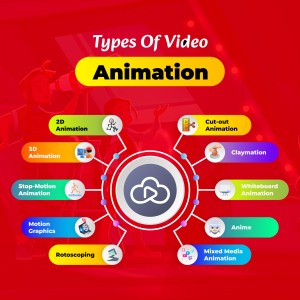
Animation is not a single art form, but it’s a galaxy of styles, each designed to serve different moods, audiences, and stories. Here are ten animation facts that show how diverse this medium truly is:
- 2D Animation remains the foundation of the industry, used in over 70% of global advertising animations. Its timeless charm lies in clarity and emotional directness.
- 3D Animation dominates film and gaming, accounting for over $25 billion in revenue in 2024. Studios like Pixar, Illumination, and DreamWorks thrive here.
- Stop-Motion Animation may be niche, but it’s the craftiest. Kubo and the Two Strings used more than 48 million hand positions during production.
- Motion Graphics power digital marketing, brand explainer videos, and UI animations, which is now a $7.3 billion global industry.
- Rotoscoping, an old-school technique where animators trace over live footage, is making a comeback in hybrid storytelling (Loving Vincent, A Scanner Darkly).
- Cut-out Animation, the minimalist sibling of stop-motion, gave us iconic shows like South Park.
- Claymation thrives on tactility, where every fingerprint left on a character adds personality.
- Whiteboard Animation remains a favorite in corporate explainer videos, increasing viewer retention by up to 15% according to HubSpot.
- Anime is not just a style; it’s a cultural powerhouse. Japan’s anime exports crossed $21 billion in 2023, outpacing many Hollywood studios.
- Mixed Media Animation, combining 2D, 3D, and live-action, is shaping the next era of storytelling. Think Love, Death & Robots and Arcane.
This variety is why animation continues to defy creative boundaries. It’s the only art form that can be both minimalist and monumental. It can be a sketch or a cinematic universe.
The New Face of Anthology Animation
If there’s one modern series that redefined what animation could feel like, it’s Netflix’s Love, Death & Robots. The anthology experiments with every frame, mixing hyperreal 3D, hand-painted 2D, cell shading, and AI-assisted rendering. Each episode feels like a love letter to creative freedom and a challenge to traditional storytelling.
Why Human-First Animation Still Matters in 2026?
In a world dominated by short attention spans, endless scrolls, and algorithm-driven feeds, animation cuts through noise like few mediums can. Studies show that animated content drives 4x more engagement than static visuals and increases brand recall by up to 80%.
But beyond the numbers, animation carries something deeper: universal understanding. You don’t need language to connect with a scene where a robot falls in love or a cat saves the world. That accessibility has made animation not just entertainment, but education, communication, and advocacy rolled into one.
The rise of virtual production and the Metaverse, which is a fusion of Web3, AR, and interactive spaces, is amplifying that power. In immersive 3D worlds, animation isn’t just seen; it’s experienced. Brands are now building animated avatars, environments, and campaigns that live inside these digital ecosystems, blurring the line between storytelling and participation. For creative studios, that means one thing: animation is strategy and not just a department.
Why You Should Animate with Cloud Animations?
If you’re a studio, a startup, or a disruptive brand, the next big leap begins with a single frame and choosing the right partner to bring it to life.
At Cloud Animations, the mission is simple: to unbridle storytelling with technology and create fast food for global eyeballs. From 2D and 3D animation to motion graphics, explainer videos, and interactive design, the team combines creativity, technology, and the power of animation. With us, you get:
- Real-time rendering and global collaboration
- AI-accelerated production pipelines
- A team that understands narrative emotion as deeply as it understands pixels
- On-time delivery without creative compromise
Our studio’s promise is rooted in technology, but its power lies in empathy and narratives, creating stories that connect across platforms, cultures, and realities.
Get your Free 30 Minute strategy
session with an experienced digital animators
Conclusion
Animation has come full circle. What began with flickering sketches now powers entire universes, from Netflix series to virtual galaxies. Technology has redefined the process, but the essence remains unchanged: human imagination breathing life into stillness.
As we look ahead, the question isn’t whether animation will evolve. It’s how businesses and brands evolve with it. Because in a world that’s constantly moving, the only way to stay still is to stop imagining.
“Animation can explain whatever the mind of man can conceive.” — Walt Disney.
Bonus Read: How to write great explainer video scripts.
You Might Also Like

How Explainer Videos Help Businesses?


The Role of AR/VR in Interactive Storytelling for Children

Why Explainer Videos Are a Must-Have for B2C Sales?

Why Explainer Videos Are Effective?

Why Are Creative Explainer Videos for Internal Business Training and Communication Effective?

How Product Explainer Videos Boost Sales and Customer Understanding?
How AI Explainer Videos Are Transforming Complex Concepts into Simple Ideas Creative

What is the Role of Corporate Explainer Videos in Onboarding and Training?
Why Whiteboard Explainer Videos Are Perfect for Complex Ideas?

How do you find the best studio at low costs for explainer videos in the USA?
Give us your e-mail so
we can give you Update